Over the past two weeks I have been researching how human life can be sustained in space and the long term effects on the human body in a zero-gravity environment.
I have learned that since the universe is vast and always expanding, space travel can last up to months or even years depending on the destination. For a spacecraft to travel to the moon, it takes an average of 3 days for a one way trip. The earth is very close to the earth relative to other planets and the sun. For a reference to how far planets are, let’s use light as a reference. Light travels at 300,000,000 m/s or 3×10⁸ m/s. Light is so fast that it can travel around the world 7.5 times in one second. Even though light is very fast, since space is so large, it takes light minutes or even hours to travel to different planets in our galaxy. For light to travel from earth to mars, it would take 3 minutes when the earth and mars are closest together and 22 minutes when earth and mars are farthest apart. If a space shuttle were to be sent to mars, it would be at the time when mars and earth are closest together. According to NASA, a journey to mars carrying humans would take roughly six months there and six months to return home when earth is closest to mars. Due to this, a lot of steps need to be taken to ensure that life is inhabitable during long term space travel. This is where my understanding of dynamics comes into play.
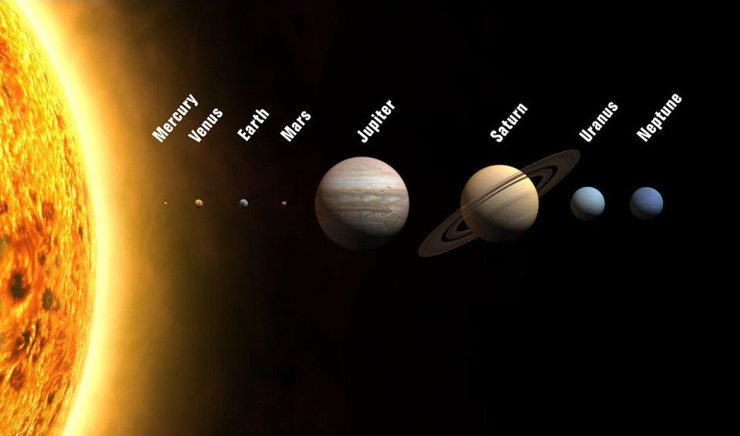
Fun Fact: In the image below it would seem that the distance between Earth and Mars is less than the distance between Earth and the Sun. Many images online of the solar system are similar. By no means are they by scale. In fact, if all the planets were to be aligned in a straight line, the distance between the Earth and the Sun would be 149.6 million kilometers while the average distance between the Earth and Mars would be 225 million kilometers. The distance between Earth and Mars at their closest points is 54.6 million kilometers while the farthest point away from each other is 401 million kilometers.
One of the ways that life in space can be made more similar to life on earth is by generating “artificial gravity”. Humans have always evolved through the gravity on earth. Due to the constant force of gravity, human body parts grow muscles strong enough to withstand gravity. This is the reason we are able to walk, run, and jump even with gravity pulling down on us. In space, if humans are exposed to zero-gravity environments for long periods of time, muscles start to weaken since the body experiences no resistance and the muscles are therefore no longer being used. The absence of forces against the human body causes the muscles to become smaller and the bones to lose calcium and become brittle. The heart and blood vessels swell from the buildup of excess body fluids in the upper body since on earth, gravity pulls the fluids in our body to the bottom of our bodies. The problems caused by extended free fall would be catastrophic if humans traveled in space over the long periods needed to reach Mars. If humans in space wanted to return to earth after being exposed to zero-gravity for long periods of time, after returning they may experience loss of vision, not being able to speak properly from weakened tongue muscles, and they may not even be able to walk on earth.
To combat this, human inhabited space vessels such as the International Space Station create their own “Artificial Gravity”. This is done through Rotating Frames of Reference and Centripetal Acceleration. By constantly rotating the whole spaceship at a constant velocity, “artificial gravity” can be created. If a spacecraft is spinning fast enough, the exact force of gravity on the planet earth (9.8m/s²) can be simulated allowing the crew to feel the same forces like on earth allowing them to always exercise their muscles and have their bodies remain normal and healthy throughout space travel.
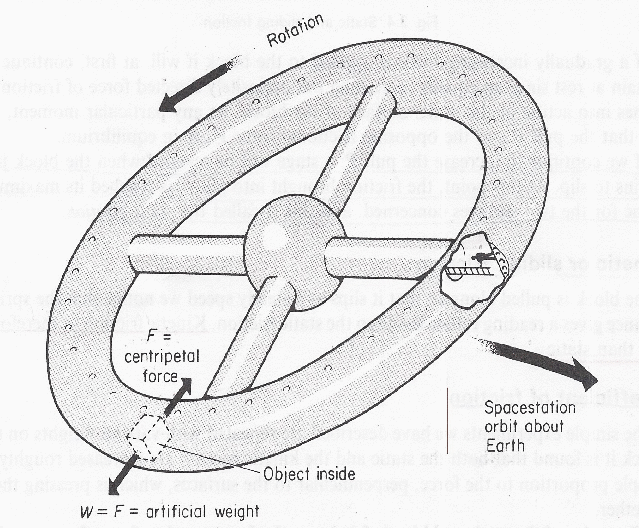
Using the formula:
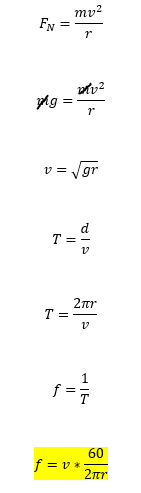
If the radius of the spacecraft is known (r in meters), and the force of gravity on earth (g=9.8m/s²), the velocity that the spacecraft needs to spin can be found. Knowing this, the velocity can be put into the period (T) formula, inverse the formula to get frequency, then multiply it by 60 seconds to find how many rotations per minute must be done to recreate earths gravity.
Example: Given a space station with radius 40m, The Space Station must rotate ~4.7 times per minute to produce the force due to artificial gravity equal to that of Earth’s gravity. (Using the formula above)
We expect to finish the majority of the website and have progress made on the video by the first week of January. The video will be uploaded to the website by the second week of January.
 Journey To Mars
Leave a comment